Tag: meditation

  • How to Make Your Mind ‘Body-Shaped’

    The resting pose at the end of pretty much every yoga sequence, Savasana (pronounced ‘Shavasana’ – the corpse pose), is surprisingly difficult to master. Far harder than a headstand, a complicated balance or an intricate bind.

    And yet it’s a crucial pose – said to allow the body to absorb the benefits of the yoga practice, restorative for the mind and body.

    Despite appearances, it’s more that just flopping on the ground like you’re dead. Yes, you need to relax your body. Unclench every muscle, let your feet flop out to the side, really become one with the floor. Surrender the weight of your physicality to the forces of gravity. But the key – as in most things – is in the mind.

    The mind must stay active, present, sharp. And yet restful. Whereas throughout the yoga practice you’ve been noticing your breath, your muscles, your alignment, in savasana you pay attention to the space in between, the resting, the tingling feeling of nothing – of the absence of movement. You seek out that delicate, exact concentration that sits between thinking and letting your mind drift, and hold it steady on the most subtle of sensations.

    So simple and yet so incredibly complicated.

    For many years, savasana was a battle in my mind. Without the active, dynamic flow of yoga on which to to pin my focus, the thoughts came flooding back. And as I ostensibly relaxed on my mat, inside my head I was taking up arms, a metaphorical sword and shield, bravely trying to fight off each thought as it arose. Convinced that this was the game – stopping my thoughts dead in their tracks.

    And then one day a few years ago, I just got it. My mind finally found where it was meant to be and somehow slipped into place.

    I should note that for others – perhaps less Type A than me – the tendency is to drift off to sleep in savasana, rather than to get lost in thought. It’s the same, really – just the other end of the spectrum. Sleep is just as far from the point of this posture as my warrior-like thought fighting.

    Yesterday I was settling into savasana at the end of a fantastic Ashtanga class, and I realized what it is: You need to make your mind “body-shaped.” Instead of letting your mind swish around in your head, where we tend to imagine it lives, you need to pull it down into your body, let it flow down your neck and spine, along your arms and your legs. Squish it into your fingers and toes and allow it to pool in your lower back and buttocks. And then let it settle there and observe.

    Because when it’s “body-shaped” rather than “head-shaped,” your mind can “think” about your body, rather than your thoughts. It can really notice the release in every muscle, the feeling of the body touching the floor, the slow, rhythmic rising and falling of the chest and abdomen. It can be totally aware of the physical relaxation.

    And now I realize – this is true for all mindfulness practice. If you want to be mindful of washing the dishes, you need to make your mind “hands-shaped.” You can’t feel the water on your skin with your head – you need to “think” with your fingers. Same goes for mindful walking, mindful showering – anything you want to do mindfully.

    It’s a mental shift that changes more than just change your “point of view” – it changes the very nature of your mind. From being primarily concerned with thoughts and other mental phenomena like emotions, to noticing the changing sensations of the body. As the father of quantum physics Max Planck is quoted as saying:

    When you change the way you look at things, the things you look at change. 

    It’s a small, conceptual change, but it has tremendous power.

    And in case you’re wondering, no – the irony of my mind imagining up blog posts while it’s meant to be down in my body, focusing on savasana is not lost on me.

    Stay tuned for natural (to me) continuation of this post: How to Make Your Mind “Baby-Shaped.”

  • A Loving-Kindness Meditation for Today

    At a bit of a loss for what to do with myself between packing up our apartment (moving this week), playing with Gadi (currently sleeping) and listening out for the next rocket warning siren (last one in Tel Aviv was about 18 hours ago), I decided to sit down and shut up. I usually end each meditation session with a few minutes of lovingkindness (metta) meditation. Here’s what I did today:


    May I be happy;

    May I be peaceful and harmonious;

    May I be liberated from suffering;

    May I be healthy and free.


    May my family be happy;

    May they be peaceful and harmonious;

    May they be liberated from suffering;

    May they be healthy and free.


    May everyone in Tel Aviv be happy;

    May they be peaceful and harmonious;

    May they be liberated from suffering;

    May they be healthy and free.


    May all Israelis and Palestinians be happy;

    May they be peaceful and harmonious;

    May they be liberated from suffering;

    May they be healthy and free.


    May all beings be happy;

    May they be peaceful and harmonious;

    May they be liberated from suffering;

    May all beings be healthy and free.


    And for bonus points (NB: points not redeemable for anything tangible):

    If I have harmed anyone, intentionally or unintentionally, I ask forgiveness.
    If anyone has caused me harm, intentionally or unintentionally, I offer peace.
    If I have caused myself harm, intentionally or unintentionally, I forgive myself.


    Practicing metta meditation is pretty simple. It’s not a magic spell or prayer; just about creating some good vibes (I’m buzzing a bit now). If you feel inclined: sit down comfortably, straighten upwards, and focus on your breathing for a bit to settle into the present and give your mind a moment to quiet. If you have a regular meditation practice you can also do that before or after – whatever feels right to you. Then repeat the lines above quietly to yourself, in your heart. Repeat or ponder if you feel like it. Bring your mind back if it wanders. Feel the lovingkindness grow in and around you. 


    May all beings be happy, peaceful and free. 

  • The Only Thing I Can Control is Laundry

    The last few years have been a real journey for me – from therapy and NLP to new friends and new places, yoga and meditation. I’ve learnt so much, and yet really it all comes down to acceptance – and control. Accepting the things I don’t like about myself and others, learning that everything comes and goes – regardless of my desires. That even the things I think are in my control generally are not.

    And now with a four-month-old baby, it seems to be the perfect time to put that understanding into practice. To really be in the moment, release my minute-to-minute desires, surrender to the timeless flow of breastfeeding. To realize how little I really know.

    And that’s why I love doing the laundry. Very non-feminist of me, I know – but seriously that shit does what I say. If I program the machine to finish at 8am, it complies. I can take out all my OCD tendencies on putting the socks on one side of the line, the baby clothes on the other, and of course separating sheets and towels (despite my darling husband’s efforts to the contrary). I can fold it all neatly and it never fights back.

    And best of all – it’s never-ending. Lucky me.

  • My Baby is a Guru

    My baby is a little Buddha. A tiny, super cute & portable meditation teacher.

    In simple mindfulness meditation, we learn to bring our attention back to the breath, over and over again. “Breathe in, breathe out, breathe in, start preparing dinner, do I have any onion in the house? Oh, I have to write that email, ah – breathe in, out, in, out, in, out – hey what’s that pain in my knee, oo my ear itches – wait – breathe in, breathe out.” And so on. Each time we remember what we’re meant to be doing, mindfulness comes back and we return to the meditation. The longer we’re able to keep our attention on the breath, the more subtleties of sensation reveal themselves to us, and the deeper our concentration and insight grows.

    So too with caring for a baby – the more we keep our attention on what’s happening in the here and now, the quicker and more accurately we’re able to respond, and the deeper our connection grows. Even from the very first day, it’s so easy to lose sight of what’s actually happening – especially through the exhaustion, confusion and emotional roller-coaster that comes with a new baby. It’s natural for our minds to wander to all the things we want to get done once the baby finally goes to sleep, to get obsessed with schedules and milk quantities and not waking the neighbors.

    But babies don’t care about this stuff, their minds aren’t running around like ours – I presume that doesn’t happen until the development of language. Instead, babies are right there in the moment, always. Just trying to get their needs met, and to work out what the hell is going on out in this strange, dry, new world. And so each and every peep they make, each groan, each cry can be a lesson in stopping the mind babble and coming back to the present moment to see what’s really happening. To investigate it with the patience and curiosity of the deepest, most silent meditation.

    Here’s an example – not one I’m proud of, but a good one nonetheless: earlier today I spent almost an hour trying to help a crying Gadi relax and get to sleep. Definitely out of character for a daytime nap, but okay. I tried everything – from singing, patting, humming and “shh”-ing, leaving him for a couple of minutes to try work it out himself, even the dummy he’s never liked – everything. He was not hungry and definitely tired, but here’s the truth – I was starving. Somewhere between noticing that he was tired and putting him down in his bed, my mind had raced ahead to the quinoa and vegetables awaiting me in the kitchen, and I wasn’t really paying attention. I was ignoring the mindfulness alarm screaming at me, loud and clear and flashing red.

    When I realized, I felt like a complete moron: He was hot. I took his pants off and the screaming stopped instantly, and a smile spread across his tired little face. And then the next moment was something different again – he was thirsty (not surprising since he’d just spent 40 minutes trying to get his point across!) And so he drank, and he’s still passed out in the middle of our bed now, over 2 hours later.

    This new level of mindfulness that he’s teaching reminds me to examine the reality of this very moment – not what came before or what I want to come after – and to deal with just that. To accept the present moment rather than trying in vain to resist or to manipulate, or to take anything for granted. Just because the baby went to sleep easily at 6:45pm last night after a bath, massage, story and feed DOES NOT guarantee that he’s going to do it again tonight, or in fact ever again. He might – but taking the assumption for granted is a surefire recipe for disaster, and for missing signs and igniting a battle of wills between the two of us. Instead, my little mindfulness teacher guides me with his signals – helping me avoid hours of him crying and me feeling like a failure. And every time I slip out of focus, start senselessly expending energy on changing the present moment – he beckons me back with his tiny fingers and his not-so-tiny cry.

    All I have to do to learn is watch and listen, now.

  • 9 Tips for Surviving the Postpartum Period

    A wise woman once told me: Nobody talks about the after party. Ironically, this mother of three told me this after seeing me basically every day of my first pregnancy, and yet uttering nary a word about what I could expect in the postpartum days and weeks. The impending labor and birth we talked about, naturally, along with pregnancy matters galore – from ultrasounds and iron supplements to headaches and contractions. Parenting plans came up, name ideas, baby furniture. Hospitals, midwives and nursing consultants. But postpartum recovery was just never mentioned. No one was game to raise the issue, it seems.

    It’s understandable. You’d sound like a right downer if your first reaction upon finding out your friend was pregnant was to tell them, “Now love, you should know that sitting down may well hurt for quite some time after delivery.” I get it. But women need – and deserve – to be prepared for this intense period. This paradoxical moment in time when you need quiet and rest more than anything else – and instead you get basically no sleep, well-meaning family and friends bugging you round the clock, and varying degrees of aches and pains. And just to make things more confusing and ambiguous, all of this is sprinkled with heart-bursting love, super birth hormones and an amazing appetite.

    And so I write this by way of preparation for those about to give birth, and vow to send it to my friends and my sisters when their time comes. Even if they don’t love me for it at the time.

    1. You’re gonna bleed, big time – and not just like the “heavy period” that I remember hearing about. The midwife is gonna stick three surfboard-size pads together for you, and you’re gonna thank her for it. Keep in mind that the more you rest, the quicker your postpartum bleeding will stop. Rest.
    2. Black is the new black. You don’t want to find out what happens when your grey sweatpants make it to your hospital bag. This goes for underwear for the first couple of weeks too (though I actually recommend buying the sexy disposable mesh ones for the first few days. So much easier).
    3. Going to the bathroom is going to hurt, one way or another. You got through the birth, you can get through this. Take it slow and if possible take the shower head with you (assuming you had a vaginal birth). Spraying water on the area while you’re doing your business is a godsend. I wish someone had told me this earlier.
    4. Cold is your friend. If you’re in a hospital they should provide frozen magnesium or witch hazel pads, and at home you can easily make your own. Trust me, you’ll almost enjoy it.
    5. Stay in the moment – don’t waste your precious energy worrying about what you could have done differently during the birth, or how long this discomfort is going to last. Try this nursing meditation, if it tickles your fancy, put your phone down and focus on your breath for a few minutes, or utilize whatever reminders you need to stay mindful of what you’re doing right now. I really believe this will keep you sane through at least some of the exhaustion and the emotional breakdowns.
    6. Give the nursing apps a miss – unless you (or your baby) are having real problems. I used one at first and started to feel like I couldn’t feed unless I had my phone, not to mention getting obsessed with how long, which boob, averages etc. Losing my phone 4 weeks in was a blessing in disguise, and I realized that a hairband on my wrist to tell me which boob was next worked (and continues to work) just as well.
    7. Let people help, but remember to tell them when you need space. I didn’t do this enough and I should have. The first few weeks are crucial for bonding with your new baby – and if you’re anything like me, resting properly with guests in your space is difficult. Leave the washing. Screw the dishes. Forget about other people’s feelings for now. Lay on the couch.
    8. Bring a snack bowl to bed (better yet, get someone else to make it for you). Waking up every hour or so to breastfeed feels a lot better when you have chocolate, dried fruit, nuts etc at arms reach. Ditto for a liter or two of water.
    9. Give yourself a break. There is an unrealistic expectation on women (I loved this blog post on the topic) to bounce back right after birth, and for most of us it’s just not that simple. Many cultures around the world expect new mothers to be completely out of action for the first 40 days. Don’t expect to feel “normal” for the first month, at least.

    If you’re reading this before giving birth – or even before getting pregnant – I should add: it’s totally worth it. It would be even if you needed to wear the triple maxi pads for six months (you don’t). It can just be a bit of a shock, that’s all.


  • Nursing and meditating (or, nipple meditation)

    Nursing and meditating (or, nipple meditation)

    So I’m pretty sure I’ve invented a new type of meditation. I’ve googled it and everything – no one has thought of it before; I’m truly a trailblazer. Combining my sparkling new motherhood experience and my only slightly more established mindfulness meditation practice, I present: nursing meditation (or, nipple meditation – if you prefer).

    Essentially a modification on anapana sati, the Buddhist meditation of mindfulness on breathing, it goes a little something like this:

    1. Do whatever you usually do to start feeding – get comfortable, have water nearby, get baby latched on and settled in.
    2. Let your eyes close gently, sit up straight, and take a few deep breaths to settle in yourself – into your body, the experience and sensations of right now.
    3. When you feel calm and present, bring your full attention to the nipple of the breast from which your child is eating. At first you might just notice the sucking, tugging sensation of nursing – and that’s fine. When your mind wanders – and it always will – your only job is to gently bring it back to your nipple. As you deepen your concentration the subtleties of sensation – perhaps temperature, speed, texture – will reveal themselves. Without judging or analyzing, simply observe – sit back and watch the sensations, the experience of each moment come and go.
    4. For bonus points (not really), cultivate an appreciation for the truly amazing process of growing this tiny, beautiful creation – which started as a few cells inside you however many months ago and now continues to be nurtured by your body.
    5. When your nursling is finished his/her meal, open your eyes and take a moment – and really be there – before rushing off to continue the ongoing cycle of diaper changes, baths, tummy time and naps.
    6. Repeat as often as possible.

    Now, I’m pretty sure this isn’t gonna give me a free ticket to nirvana or anything, but it does seem to be keeping my fledgling meditation practice at bay while riding the early months of parenthood. Just breaking it down, getting out of my head and into my body for a few minutes, a few times a day brings a centered quality to my consciousness that I’ve only ever been able to achieve through meditation.

    Babies live in the moment. The least we can do is try to meet them there every now and then.

  • Gadi’s Birth Day (or, hospitals and Hypnobirthing)

    There are so many angles and ideas running through my head from which to come at this story – and of course the voice telling me to just take a nap, or pick up the gorgeous baby sleeping next to me and watch him for the next hour instead. Do I focus on expectations vs. reality? The indescribable joy that Uri and I are filled with every time we look at Gadi which overshadows anything that did or didn’t happen on his birthing day? How Hypnobirthing and a positive attitude in general made lemonades out of labor lemons? The bitchy list of “37 Ways in Which Hospitals are Anti-Health” which has been bubbling in my brain for three weeks now? Or some sort of babbling narrative combination of all of the above?

    Gotta just start writing. Before it all disappears into a blur of laundry and feeding apps and enough baby photos to make all of my Facebook friends “hide” me in their news feeds.

    I woke up around 6am on Saturday February 1, 2014 – Gadi’s due date – with the slow realization that these gas pains were getting pretty regular and might actually be contractions. After snoozing for as long as possible I got up and started timing the sensations, and doing some Hypnobirthing breathing and visualizations. I felt (and continued to feel for the entire labor) everything in my lower back, but at this point a bit of focus and relaxation got me through them pretty easily. They were coming about 5 minutes apart, for less than a minute. After about an hour I woke Uri up and told him that despite my months of trash talk about due dates, we may well be about to meet our baby on his. As we added final touches to our hospital bags, I lounged around the apartment finding positions which were most comfortable during contractions, had a shower, spoke to the midwives at the natural birthing clinic at Tel Hashomer Hospital, and agreed that we’d talk again once the contractions “got more intense.” Whatever that meant.

    We decided to go for a walk, and at first it was great to be outside and moving around. We live in the middle of a city though and it didn’t take long for me to start feeling pretty self conscious about needing to lean over something, swing my hips and groan for a minute every few minutes. I was starting to understand what I’d read and heard about women in labor needing a private, intimate environment. More on that to come.

    To prepare for labor and birth, Uri and I had taken a course in Hypnobirthing, and were planning for a calm, gentle, natural birth. I’d had a smooth, chilled pregnancy and despite some minor jitters towards the end, when the birthing day arrived I was calm and excited, and certainly not scared. The ease with which I was dealing with early labor led me to believe that the whole process would be a breeze just like I’d imagined, and that in a few hours I’d be floating in a birthing pool, looking beautiful and breathing my baby out into the world. Hmm, not quite.

    Before long we were back home, spoke to the midwives again, and decided to head into the hospital. I put on my headphones, snuggled up to a pillow and practiced the Rainbow Relaxation in the back of the car, pulling myself forward to hang off the passenger seat every time a contraction started. It was uncomfortable but not that bad, and I was excited when we got to the hospital about 20 minutes later. I had expected the car ride to be far worse.

    In actual fact, the next 4 hours or so were probably the worst part of the labor, and certainly the reason I’ll be planning things very differently the next time around. Without going into too many tedious details, I went from 2cm to about 7cm dilated, from contractions being manageable to taking up my entire focus and concentration, from feeling like I was in control and my body was just doing its thing to wanting to cry from frustration at the entire system. I understood first-hand how hospitals can funnel women straight from their dreams of natural birth and empowerment to screaming at their partners and begging for epidurals.

    Despite having booked and paid for the natural birthing center I had to endure two 20-minute fetal monitors – supposedly laying flat on my back which felt completely impossible for me – and was ultimately told that I couldn’t be admitted because the baby’s heart rate wasn’t staying steady enough. While this almost threw me for a loop the truth is that by then – at least three hours after arriving at the hospital – all I wanted to do was get into a private room and I didn’t really care which one it was. Laboring in public is the pits, plain and simple. I still cannot believe that such a major hospital doesn’t at least have small areas for women and their birth partners – seriously a few meters curtained off with a beanbag and a physio ball would do it – while waiting for various checks and “measures” of progress.

    In any case, we were taken into the delivery room around 4pm, having finally met up with the natural birth midwife who would accompany us for the rest of the journey. I was basically stripping as we walked down the hallway in anticipation of the jacuzzi, believing that it would finally get me back into the “zone” and out of this horrible hospital vibe. The room itself – while still a hospital room – was at least spacious, and I was able to move around easily as we had a cordless fetal monitor (which I had to wear continuously  all of the time because of the earlier dodgy reading) from the natural birthing suite. The only real “intervention” that I had to suck up was having an open vein put in as soon as I got into the spa – apparently hospital policy.

    The order of what happened next is all a bit of a blur. Around the same time I got into the pool I felt my waters break, the midwife checked and I was at about 7 1/2 cm, and I realized it was time to let go. To let go of my disappointment about things not going exactly the way I’d planned, my surprise at how much contractions hurt, and the fact that I was in a hospital room with no tie-dye and no flowers in sight – and that I probably looked like shit. While my husband has since assured me I dealt with everything calmly and gracefully, it all seemed kinda crazy then and I had to find the space to be okay with it.

    And where was the Hypnobirthing in all of this? Maybe I left it in the car, I dunno. I’m pretty sure that there were positive effects from all my practice – the fact that I was never scared, for example, and my familiarity with the slow breaths I used through each contraction. But there was certainly no rainbow mist and no time for visualizations. I remember Uri trying to start reading a script at one point and I was like “seriously? The contractions are like 2 minutes apart and last for over a minute – there’s no time!” And that was that.

    After a while I had enough of the jacuzzi – it was a corner spa rather than a proper birthing pool and not the most comfortable – and started trying to find a more comfortable position around the room. I walked and leaned on Uri a bit, draped myself over the end of the bed, squatted… and before long the midwife checked me again and said I was 9 1/2 cm dilated and could start pushing whenever I wanted. I remember feeling excited about actually being able to “do” something, but confused because that “urge” that everyone talks about to bear down – I never felt it. I was enthusiastic though and the pressure of the baby’s head was definitely getting lower, so I started moving into the “birth breathing” that we’d learned and practiced. I don’t know if maybe I wasn’t doing it right, or if it was too early, but it did nothing – and eventually the midwife told me “honey, maybe this hypno-breathing works for second and third babies, but you’re gonna need to take a deep breath, hold it and push your baby out.”

    So what was I gonna do, you know? Tell her “listen lady, I’ve read a whole book – twice! – and been to five classes. What do you know?” At the time it felt like she was the only person who was gonna help me get the baby out, and I really wanted to meet him by now. I felt like it had been forever and I’d had enough. So I held my breath and I pushed and pushed. I got cheered on, I moved around, and slowly slowly our baby’s head moved down and finally emerged through that “ring of fire” that I’d read about. Definitely the most painful part – and yes, I made some noise  – but it didn’t take too long. Another push and his whole body slid out, and suddenly our beautiful (and I mean beautiful!) baby was screaming and squirming on my stomach. We moved from the birthing stool on the floor up onto the (horrible hospital) bed and spent a surreal hour smiling, eating and exhaling, all the while with little Gadi trying to latch on to my nipple. I discovered then that it had actually only been a few hours – Gadi was born just before 7pm on his due date, 12 hours after I woke up and realized I was in labor. I also learned that Uri had not eaten or been to the bathroom all day – I really cannot explain what an amazing support he was (and continues to be).

    During those next few hours I feel like I used more Hypnobirthing techniques than during the birth itself, but maybe it’s just that I was more conscious of it. In conversations about when to cut the cord and refusing Pitocin to help with the afterbirth, I felt I was able to stay calm and clearly voice our wishes, just like we’d practiced in class. And when my (multiple) tears were being stitched (while Uri had gone with Gadi to the doctor) I managed to stay very calm and relaxed with breathing exercises and visualizations.

    That night and the next day or two weren’t the easiest for us – Gadi was hyperventilating and needed to have his stomach pumped and receive oxygen and fluids, and I got a bit post partum anemic, needed fluids and was very weak and dizzy – but I believe our Hypnobirthing preparation helped us stay as calm as possible. Here too, the challenge was to let go of our expectations and to be with the reality as it was. And it really wasn’t that bad. Happily, Gadi passed each test and check with flying colors, and I was able to feed him the following day, though we couldn’t bring him out of the nursery or take anyone else in with us to meet him. We dealt with our well-meaning family and friends calling and wanting to visit – some more understanding than others – as best we could, and tried to focus on bonding with our baby in the neon lights of the nursery.

    So what are my takeaway points here? Birth is hard, and hospitals functioning in this way make it harder. I think that if you want a calm, natural birth either stay away from hospitals altogether, or if that’s not your thing get a doula. We’ll be doing one of the two next time for sure. I was very disappointed by the way things worked out with the natural birthing center, and don’t think that as first-time parents there was any way we could have kept me in the zone where I wanted to be in the face of the hospital bureaucracy and hoop-jumping. I should note that it’s the anti-birth and anti-recovery hospital policy with which I take issue, and not the conduct of individual staff members which was almost exclusively excellent.

    At first I felt quite disillusioned with the way everything turned out, but I’m finding my peace with it now – especially as I start to feel more human and Gadi is just the most beautiful, chilled baby. Despite the “hospital” feel of the birth and all of my frustrations, everything did unfold completely naturally – by the book, really – and I still firmly believe that most women are able to birth their babies in this way. We just need to remember to breathe.

    Gadi Henry Goldberg
    Born 6:55pm on 1/2/2014
    Weight: 3.7kg
  • My Billy Joel earworm

    For the last month or so, Billy Joel has come to visit me every time I sit down to meditate.

    It goes like this: First I fidget around a little bit, then my mind starts psychotically going over pretty much everything that I’ve said or done in the past few hours; every email I’ve read, everything I’ve seen. Some days it takes longer than others, but sooner or later the mini life-flashing-before-my-eyes fit dissipates and fades, and then the piano starts…  “she can kill with a smile, she can wound with her eyes…”

    Billy never stays for long, doesn’t even really bug me that much, to that point that it was only last week that I realised this had been going on for quite some time. A couple of days ago I thought to mention it to a fellow meditator, and when I went to tell him what song had been stuck in my head all this time, I could only remember the word “woman,” and thought that maybe it was Bob Dylan’s “Just like a woman” which had been plaguing me, though I knew it sounded wrong.

    Yesterday I put my finger on it, and this morning I listened to “Always a woman” all the way through, in an attempt to purify my meditation.

    A word to the wise: It doesn’t work. Billy has now been yelling in my ear for almost 12 hours straight.

    So a few hours ago I did what I do: I googled it. It being “song stuck in my head.” Turns out, the phenomenon has a name: I have an “earworm.” And for anyone who was wondering, the site unhearit.com doesn’t work either. In fact, by its own admission, it’s really only making things worse, by playing “equally catchy songs” to replace the musical culprit.

    The experience reminded me of one of the many anecdotes I had wanted to include in my initial Vipassana run-down blog (read: babbling Dhamma-high manifesto), but forgot due to the prohibition of writing materials on retreat. I had wanted to share the variety of songs that had played over and over in my head – earworms, that is – during the 10-day retreat, when I’d had absolutely no recourse but to let them wiggle their own way out. From Sinead O’Connor’s “No man’s woman,” courtesy of a decidedly man-like woman on the course wearing a t-shirt with those words across the front almost every day, to a certain song we used to sing on youth movement camp, the name of which would probably bring the level of this blog down significantly (the Netzer kinky perverts among you will know what I’m talking about). Happy Hardcore tunes I swear I haven’t heard for a decade came pumping up again too, along with Hebrew songs to which I only know half the words. My mind was happy to fill in the blanks to anyone who’d listen (which in this case was no one, myself included).

    I’m pretty sure “Always a woman” never made an appearance on Vipassana though, and all the songs that did are long gone.

    In any case, almost an hour online and I’m none the smarter. No one seems to be able to give me a definitive explanation as to what Billy is doing in my brain, or how to get him out. Some pundits seem to think my brain is just trying to keep busy while its idling, which seems unlikely (trust me: it’s got plenty of other material to ponder). The more Freudian among the lot reckon the song that’s stuck is rebelling against its own suppression.

    I was, however, reassured to find out that my “earworm” is not a cause for alarm and does not indicate any mental disorder. Phew. Here’s the best I got: In a list of tips for eradicating said worm, one blog suggested sharing it with a friend. So, I pick you guys:

    Stay tuned to find out whether it worked.

  • Not-so-secret Samadhi: Part II

    My first 10-day Vipassana retreat (full run-down here) was by far the most intense meditation experience of my life thus far, so I’ve decided on a separate post for the nitty-gritty, nerdy details. While the main motivation for me in writing this is to sum it all up for myself, I’m also interested to hear if other Vipassana meditators have had similar experiences, any tips, etc. I’d love for everyone to read it but a disclaimer for those not into meditation: There’s a lot of jargon in this post.

    Some background on my practice up until the retreat before I launch into the gory details: I’d been practicing a Mahasi noting technique for about two years, at first self-taught using the fantastic book, Progress of Insight. In the following years I attended a few relatively chilled weekend retreats, taught by the likes of Shinzen Young and Stephen Fulder as well as some day retreats and a bunch of group sittings at Miles Kessler’s Integral Dojo in Tel Aviv. Somehow I’d managed to navigate my way into a fairly serious practice (apart from the past few months when I slipped a bit due to various lifestyle factors), and seemed to be cultivating a keen understanding of physical and mental sensations, the interactions between them and the three universal characteristics of existence (impermanence, unsatisfactoriness and non-self).

    Being on a longer, stricter retreat than I’d ever attended was a bit of a shock to the system at first, but on top of that learning a different anapana technique (with focus on the nostril and upper lip) and then panña technique (body scan) from what I was used to led to a fair bit of confusion and resistance. If I hadn’t previously learnt about the Five Hindrances to meditation (craving, aversion, tiredness, restlessness, doubt), I’m pretty sure I would have “packed up my bags and run away” (in Goenka’s words), cursing both his name and his teachings.

    Apart from general resistance in the mind (“this makes no sense,” “who is this weird guy on tapes/video, tuning in from Planet Nibbana to preach to us poor prisoners,” “I’ve chosen a bad time for this retreat,” etc, etc), I suffered some pretty bad eye strain at a few different points in the course. It started on the first night (Day Zero) and continued throughout Day One, and eventually I realised it was caused by me literally going cross-eyed with my eyes closed by “looking” at my nose. I found that whenever I tried to consciously relax my eyes, my attention would slip down from my nostrils to my stomach, the area via which I was used to focusing on my breath. Eventually, after talking to the teacher and basically just reminding myself over and over to stop it, I managed to relax my eyes, and almost instantly dropped into what I believe to be a concentration state that I’ve experienced before but never really known how to deal with.

    I’m pretty sure I used to experience this particular state as a child lying in bed at night, and it used to scare me then. As a result, when I’ve encountered it in recent years it still carries with it a certain fear, which I’d never quite been able to shake. Strange as it may sound, when I was young I was convinced that unlike “normal” people, I actually didn’t breathe. When I found out that actually I did respire, just like everyone else, I was sometimes gripped by an irrational fear that if I didn’t pay attention, I would stop. So sometimes I would lie in bed at night “checking” that I was still breathing, essentially practising my own little infant anapana meditation. During this practice, I’d suddenly get this odd sense that I was either really big or really small, though I’d open my eyes and find that everything looked completely in order. It still felt strange though, eerie but still very clear. This is exactly the same feeling I had on Day Two of the retreat, in one of the morning sessions right after I worked out how to relax my eyes.

    I remember encountering this state before on a few day retreats last year and the year before, and every time I would become filled with that same fear from my childhood, get myself all freaked out that I’d “broken” my brain, and had to open my eyes and basically break my concentration completely. The same thing happened on Day Two, and – surprise, surprise – I found myself “falling” back into various aches, pains and doubts for the next few days.

    By Day Four when we were taught the body scan technique my attention was pretty sharp, having spent so many days focusing on my nose, but again I felt resistance to the new technique, which I thought completely ignored a whole range of sensory experience (sounds, thoughts etc.) I spoke to the teacher about this and he gave a decent explanation, saying that with any sensation other than those on the body what we’re actually observing is the reaction to it (or the crude mental image), so it’s not as pure. Some combination of trusting him on this and wanting to give the technique a fair trial pushed me to keep going.

    On Day Five I ended up in the creepy place again, but this time I had cultivated enough equanimity to push through the fear, to keep striving to observe sensations on the body despite the strange feeling. I discovered that I could actually feel things at a far more subtle level than ever before, and also properly understood that the weird feeling would pass as soon as I opened my eyes, that it was just another object coming and going (anicca – impermanence). I don’t know how else to describe it but to say that this drive propelled my practice to another level, and from here on in my attention was almost unbreakable (except for a coughing, crying and sneezing attack from the girl behind me on the night of Day Six, but that’s a story for another time).

    On Day Six I found I could feel sensations all through my body, not just on the surface, and started exploring that, quickly getting to the point where everything dissolved into fine vibrations. I naturally started adding in an observation run up and down my spine, and it didn’t take long until I was experiencing what I think was the “Bhanga Nyana” that Goenka described in the Dhamma Discourse one of the following evenings.

    I felt like I was making definite progress and tried as best I could not to let my (substantial) ego get in the way and ruin everything (most likely decide that I was the World’s Best Meditator, cling to this experience for dear life and then get annoyed every time it failed to arise in subsequent sessions). From then on my mind seemed razor sharp every time I sat down to meditate, quickly got to this state and then navigated it “with a calm and equanimous mind.” Straight after that, things got very gross and chunky and haven’t really changed since.

    From about Day Two onwards, I thought a lot about was Daniel Ingram’s book, Mastering the Core Teachings of the Buddha. I went back and forth between wishing I’d never read the stupid thing (thought it is definitely one of my favourite books of all time), and trying to work out whether it would be worth making up a story to get the course manager to give me my phone back so I could google the section where he describes the samahdi states and the stages of insight, to try to work out where the hell I was. Of course in the end I didn’t, thought it was the first thing I looked up after I turned my phone on and called my boyfriend and my parents.

    At the time I thought the experience of the body dissolving was something of a “Knowledge of Arising and Passing Away” (A&P) event, though I’ve since found that it is the 5th Stage of Insight, “Knowledge of the Dissolution of Formations.” After that (when everything goes gross again), it seems that I’m bouncing around up and down somewhere there in the “Dark Night.” I’m pretty sure I’ve not reached Equanimity (stage 11). I should note at this point that I feel completely ambiguous as to whether or not reading such maps and descriptions of other people’s experiences is more of a hindrance or a help, but either way I intend to keep up my practice and push through to see what’s next.

    Alongside all of this on-cushion fun, from about Day Five onwards I found that had heightened understanding of the theory which goes along with all of this practice, which I detailed in my last post on the topic. Concepts of craving and aversion of sensations chrystallised like never before, as well as acceptance of the impermanence of my own body and the benefit of non-reactivity (to objects such as self-degrading thoughts, for example).

    Since coming home I’m finding the usual resistance to long sits, with the mind conjuring up all sorts of excuses as to why I should sit for half an hour rather than an hour, why it’s better to wait a few hours rather than sitting as soon as I get up (not having a full-time job at the moment probably isn’t helping here) and why today should be an exception to the rule. However for the most part, I seem to be keeping up with long sessions morning and night, as well as a few minutes here and there throughout the day. I’ve also found that quite a few of my usual vices have all but slipped away, with no cravings whatsoever, I’m more than happy to go to sleep at a regular hour (which has always been a problem for me), and I’m very comfortable with long periods alone (also an issue in the past as something of a die-hard extrovert).

    To sum up, I think that despite my early discomfort with the new technique, body scanning helps me keep the “me” out of my practice, and to see the Three Characteristics of each object clearly (specifically impermanence). While there was a certain intrigue to the noting technique for me, I think I was often getting caught up in the content, using it as a type of self-therapy to understand how my thought patterns and physical sensations interrelated rather than as the tool to see true nature of things that it’s meant to be. For now I plan to continue with the technique, until such a time as I might be able to attend a long Mahasi-style retreat (presumably in Asia rather than here in Israel) and get the thorough basic training in that technique that I got from Goenka this time around.

    In other news, meanwhile, I’m running at 10km race in the morning and my primary training over the past couple of weeks was pacing up and down the small walking track on retreat (wearing Crocs no less!) Wish me luck!

  • Not-so-secret Samadhi: Part I

    I recently returned from my first 10-day Vipassana meditation retreat, which among many other inspirations and insights spurned the starting of this new blog. In the first few days of the course, after my initial shock cleared and before the more serious meditation drive set in, hours upon hours were spent planning out blog posts, writing and re-writing headlines and subheadlines (once an editor, always an editor), and generally trying to keep myself sane.

    It seemed to me at the time that I would somehow store these posts in my brain, arrive home, sit in front of the computer, and type it all out (no writing is allowed on these retreats, so as to help cultivate quiet in the mind). Unfortunately – though not surprisingly – not all of the inspired, Pulitzer Prize-worthy material I dreamed up has remained intact in my mind. Now as I sit to write bits and pieces are coming back to me, though I’m pretty sure I left some stellar paragraphs and anecdotes floating around the greenery of Kibbutz Beit Zera. Ultimately, my purpose was served; I’m pretty sure I did not go insane and I hope that on top of that there will be some entertainment or interest in here somewhere.

    The morning of the course my nerves were palpable. I’ve practised meditation for years and had been trying to find the right time to sit the retreat for just as long, but nonetheless was filled with doubt and anxiety. Would I be able to deal with it? Would the technique be right for me? Would I get hungry without a proper dinner? Would I go crazy without being able to talk? And yet, somehow as soon as I bid my boyfriend farewell and entered the grounds of the course, all the tension dissipated; I knew I’d be fine, though I still anticipated some tough times and hard work in the coming days.

    Day One was fine; settling in, starting to learn a new concentration (Samadhi) technique which was similar enough to ones I’ve practised in the past to make me feel confident (read: arrogant), yet different enough to both challenge me and frustrate me at the same time. The food was good, accommodations simple but totally liveable and the meditation hall seemed vaguely conducive to meditation. To my surprise, falling asleep at 9:30pm and getting up at 4am wasn’t even that hard, and I didn’t miss home anywhere near as much as I’d anticipated.

    Day Two was harder. I had a notable meditation experience in the morning and then grew edgier and edgier as I failed to replicate it and instead fell back into the usual aches, pains and distractions typical of the early stages of meditation (more on that in my next post). By the afternoon, I had two voices in my head (not to worry, they were both me) yelling back and forth at each other over a bowl of popcorn and a plate of thinly sliced fruit. While I didn’t actually consider packing up and leaving, I certainly didn’t have the peace of mind to see the experience for what it was – simply a bad mood.

    A little background on the course is probably in order at this point: Vipassana Meditation, as taught by India’s S.N. Goenka, is taught in strict 10-day intensive residential courses, during which students are required to undertake a moral code (no intoxicants, no killing, lying or stealing, no sexual activity) in order to purify their minds enough to learn the technique. They also commit to a Noble Silence, meaning no communication whatsoever with other students (talking to the teacher about meditation and course staff about logistics is permitted). Men and women are separated, no religious or spiritual practice is allowed, reading and writing is also out, and dinner is just a light meal of popcorn and fruit (experienced students skip the meal altogether). It sounds strict, and it is, but it all serves a very important purpose. These factors combined help the head and the heart calm down enough to get the most of the training, and establish a solid base in meditation practice.

    In terms the meditation itself, Vipassana (Pali for “insight into the true nature of reality”), involves observing physical and sometimes mental sensations in order break down and cleanse defilements of the mind and ultimately lead to liberation from suffering, enlightenment, Nirvana, call it what you will. The process involves understanding the true nature of what we call “I” and “mine,” by clearly seeing the factors that make up our physical and mental structures. It’s constantly stressed that this is a life-long endeavour (or potentially many lifetimes, depending on views on reincarnation and rebirth), and that learning the meditation technique is just a starter. That is to say, it’s not a 10-day course to fix everything and achieve enlightenment in one fell swoop.

    I should note that I feel a tension here, a dichotomy, between the urge to share my experiences with friends and strangers, relatives and potential meditators alike, and the shift over the duration of the course in terms of my own identity and ego. In the first few days of the course, as I played around with posts in my head, with many “relative” insights on family, relationships, myself, etc. all of the details seemed terribly interesting. To myself and to others. The small idiosyncrasies of my brain, the little jokes I made to myself, etc. I don’t know whether I was actually just going a little nuts having no one to play with but myself, or that I’m taking the “I” in that sentence a little less seriously now, but either way, I hope the overall wisdom gained can shine though, over the playful voice that followed me around those few days, thinking of ways to share all this. Ultimately I’m only aiming to entertain and explain, though who knows, maybe there are a few seeds of inspiration in here somewhere too.

    And so on Day Three, this blog was born in my head. Incidentally, this was the same day I discovered I am not a camel. That is to say, I properly understood that eating two plates of food at lunch because I was worried about being hungry in the evening wouldn’t actually keep me full for longer, and instead would only result in me feeling uncomfortable for a few hours in the afternoon. I also stopped piling a plate full of salad, bread and cheese every morning as though I was at a hotel breakfast buffet, and instead was satisfied with a bowl of porridge and stewed fruits, eaten at a normal pace. To me this is an example of one of many “relative,” (ie they’re relevant to my life now but not to my “ultimate” understanding of the world and the way things work) experiential understandings that I gained on the course. Things that I already understood on an intellectual level but had not yet quite sunk into my gut.

    On Day Four I decided that the Meaning of Life is tehina, and discovered meditating on my bed in the hours we were allowed to practice outside of the hall (so soft! why was I torturing myself sitting on the floor??). It was also around this time that the chatter in my head started to die down, further supporting my meditation practice. By this, I don’t mean that my thoughts disappeared altogether, but rather that they faded into the background unless “thinking” was actually what I was doing at the time. Something like a radio turned down, that I could tune into at will, rather than me standing on the tip of my brain yelling at myself non-stop, demanding all of my own attention.

    From the first night of the retreat onwards my night-time dreams were incredibly lucid, symbolic and basically text-book, and as a result occupied my thoughts during a substantial amount of non-meditation hours. Freud would have had a field day. It was as though each night my subconscious would pick a topic, say family or relationships or career, and then pick the most obvious symbol possible (knives for anger for example, or job interviews for career deliberations, I mean come on!) and weave profound tales for me to figure out the next day. I came to some solid realisations about myself with the help of these dreams, which I believe were able to come out due to the calmness of my mind and the effect of meditation on subconscious.

    From Day Five onwards my concentration and balance of mind (“equanimity” as the jargon goes) reached such a point that my meditation experiences really took over. I was able to stay focused for long periods of time, my insights got deeper and deeper and all of the teachings started to come together. While I already had some understanding of the teachings of the Buddha, (again, primarily on an intellectual level) the concepts really chrystallised for me around the middle of the retreat and I was able to see them clearly both during and outside of meditation.

    Specifically, I gained clear insights into the nature of craving and aversion. I’d always thought of these forces as being related purely to outside stimulus, substances or people or food or whatever, but instead I saw that it’s all about the sensations we feel on our bodies. To put it simply, that the alcoholic is not actually addicted to alcohol, but rather to how alcohol makes him feel. While I didn’t have any single malt whiskey on me at the time to test out that exact theory, my mind was clear enough to experience it during other situations. I felt subtle, pleasant tingles on my body when, say, I thought about something cute my boyfriend had said to me the previous week, as well as the way my left shoulder clenched up and strain started to spread up my neck as anger gripped me when the girl behind me coughed directly on my back for what seemed like the tenth time in a one-hour session.

    But that was only the beginning. If the nice thought had come to my head, I felt the pleasant tingles, and then kept doing whatever I was doing, that would have been fine, but that’s not generally the way things went. Instead, my mind would crave the nice feeling again, so it kept clinging, trying to replay the thought, trying to get the tingles back. Similarly, long after the coughing behind me had subsided, every time I thought about it or anticipated the next cough, the pain in my shoulder would start to build again, without the initial stimulus. The problem wasn’t the good feelings or the bad feelings in and of themselves, but rather my reaction to them.

    Of course, I’m just reinventing the wheel here. These have been the teachings of various enlightened beings through the course of history, from Buddha to Jesus to the spiritual leaders of modern times – I was just understanding them via observing sensations on the body without identifying with them. Watching reality unfold. And through this I started to realise the value of “reprogramming” my mind – to choose how to respond to real stimulus rather than reacting, reacting, reacting on autopilot. And this is exactly what I was learning via the meditation – how to watch the pain in my knee as it came and went (and it always did), rather than wriggling around trying to find the perfect position to make it go away. That suffering comes from struggling to make things other than they are, whether that be by craving something that isn’t or hating something that is.

    Back to the day-to-day of the course. For the first half of the retreat, I had been convinced that once I got past Day Five and onto Day Six I’d start to feel like I was on the downhill, like it would all be over soon. That I’d soon be home applying all this wisdom to my real life, rather than living on this weird camp with all of these restrictive conditions. Of course, it didn’t go this way at all. In fact the numbers game I was playing in my head – how many more nights, hours, this time next week etc – just got harder once Day Six came around. Suddenly it was like, “Oh my god, I have to do ALL of that AGAIN?” As a result, it was somewhere around this point that I resolved to stop counting, to stop thinking forwards and back all the time, and to just be. Easier said than done, of course, but my understanding of the nature of craving and aversion seemed to help. Until about Day Eight, that is, when fantasies of talking again and getting home were inevitable. Still, I tried to keep them to a minimum so as not to waste the last few days of the retreat.

    Days Six to Nine are kind of a blur at this point, to be honest, filled with leaps and bounds in my meditation practice, more insanely vivid dreams and lots of lentils. Somehow I settled into the routine and grueling schedule, giggled to myself as jokes came into my head without spending too much time lamenting the fact that I couldn’t share them with anyone, and put my inner coffee snob aside enough to actually look forward to instant coffee at breakfast every day.

    One specific event that stands out from the last few days was on Day Eight, as I was flossing my teeth after the nightly popcorn break. I felt a seed stuck in one of my teeth and so was checking out the situation in the mirror, and I found a massive hole in one of my back teeth, which I decided was starting to rot. My mind, which had been relatively clear for days, whirred back into action. Thoughts of poison going into my bloodstream, painful root canal therapy and bad breath bounced and ricocheted around the inside of my skull, and I was sure I’d never be able to meditate again what with all this noise. While realistically I understood that we were only talking about 48 hours until I could get to a dentist – hardly the end of the world – my mind reacted to this stark reminder of my immortality, of the inevitable decay of my physical structure, and it didn’t like it. At one point I even considered taking the issue to the teacher, though technically we were only meant to discuss details of the meditation technique with him.

    This all took place over the course of a few minutes, as I walked back to my room and sat down despondently on my bed, thoroughly depressed by ghoulish images of a dentist’s chair. Absent-mindedly, I began folding some clothes I’d washed earlier, and found a hole in the toe of a sock I really like. I threw the pair in the bin, giggling to myself as I imitated Goenka’s voice in my head saying “aniche, aniche” (Pali for “impermanent”). And then, instantaneously, I stopped worrying about my tooth, as another part of the teachings I’d been hearing about for days sunk in; it’s our attachment to the solidity and permanence of our physical and mental structure which causes human suffering. I’m 30 years old – of course my teeth were never going to remain in pristine condition forever! The gong sounded, I went back to the meditation hall and sat a compelling one-hour session, watching with wonder and heightened understanding as sensations arose and passed away, as they always do.

    And then somehow it was Day Ten, the day that we moved from Noble Silence to Noble Speech (ie we were allowed to talk to other meditators while taking care not to lie or harm others). This was a serious shock to the system. Suddenly all the solemn faces I’d gotten used to around me turned into talking, laughing, expressive creatures, all wanting to share their experiences and gossip and ask questions and generally make noise. I found that at first I could only take it in short bursts, that I was far less interested in small talk and details than I had been in the past, and retired to my room for a nap after about an hour of talking, my head reeling from all the stimulation. While I do have some doubts about the structure of these courses, this “buffer zone” is definitely a stroke of genius. I can only imagine how it would have been to feel like this straight after leaving the retreat – I doubt it would have been pretty.

    For the remaining 24 hours of the course we kept to a slightly altered schedule of meditation and talks, while chatting away in our rooms, common areas and the dining hall in between. I kept expecting the focus and concentration I’d built up to disappear what with all the extra noise both inside and outside my head, but in actuality it only took me an extra few minutes to get into the groove. Either way, when it was time to leave the following morning I was more than ready, and excited to share my experiences with the people closest to me rather than the perfect strangers I’d been wordlessly passing in the halls for 12 days.

    My landing back in the real world was softer as a result of this buffer zone, and though the sharpness of mind I cultivated on the course has somewhat blunted since, definite benefits have remained. Things that used to get my blood boiling have left me feeling only slightly ruffled, and cravings for various things other than present reality, from food to whiskey to people saying what I want them to say have dwindled or seem to be almost non-existent. There’s still serious work to be done, don’t get me wrong, but the retreat certainly seemed to get the ball rolling.

    To anyone thinking about going on such a retreat, don’t kid yourself that it’s going to be easy but I’d definitely say give it a go. To me, both Vipassana meditation and the clarity gained by taking a few days away from the countless stimuli of our modern lives teach lessons which are universal and can be applied to all sorts of situations. I feel like I’ve benefited tremendously and would highly recommend it.

    For those meditation nerds, would-be medtiators, and general spiritual enthusiasts out there, stay tuned for my next post, on the actual nitty gritty of my practice on the retreat.

    Oh – and a visit to the dentist since I returned home revealed that in fact my teeth are in fantastic condition and it seems the only decay is in my mind. Very glad I didn’t waste two days worrying about that one.

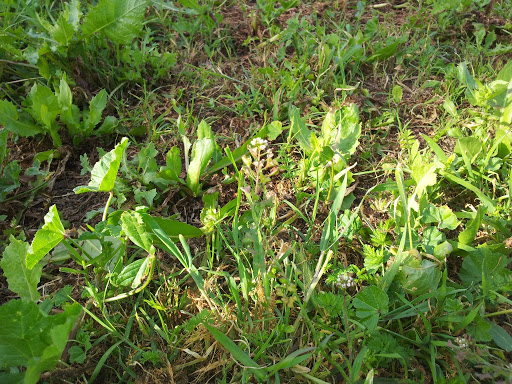
    A flower (read: weed) with heart-shaped leaves which caught my attention during the retreat.
    Note: Photo was taken after the retreat.