Category: babies

  • Redefining the Four-Month Sleep Regression

    Ever since my peers started having babies, I’ve heard about the ‘Four Month Sleep Regression’ – generally defined as “just when you think you’ve got a handle on getting the baby to sleep, everything goes to shit.” And there’s definitely something to it – our four- (almost five)- month-old has been going through some big changes over the past few weeks – and as a result his sleep has been negatively affected. Whereas not long ago we were able to put him in cot drowsy, sing a little and say goodnight and he’d drop off by himself, now bedtime can be anything from him passing out on the boob, to a full hour of inconsolable screaming (usually ending with him falling asleep on the boob). And this goes for daytime naps, too.

    Nonetheless, I’m here to assert that this trying phase deserves a new name. I strongly believe that how we term and frame things shapes our experience – and that by choosing better words we can opt to bring more enjoyment and less suffering into our parenting.

    Over the past few weeks, Gadi has been going through some crazy leaps and bounds in his development – both motor and cognitive. When I’m not playing with him, doing the laundry, feeding or writing, I’m loving just watching him learn and explore. He does this adorable little skydiver move, on his tummy with his arms and legs out and up, he giggles and chats and dribbles. He reaches for toys and gets entranced by noises and colors. To my reading, this huge influx of sensory information is keeping him wired, making it more difficult for him to relax enough to get to sleep. And I totally get that; I know that when huge things have been going on for me – like covering massive news events in years gone by, for example – I’ve found it pretty hard to wind down and drift off to sleep.
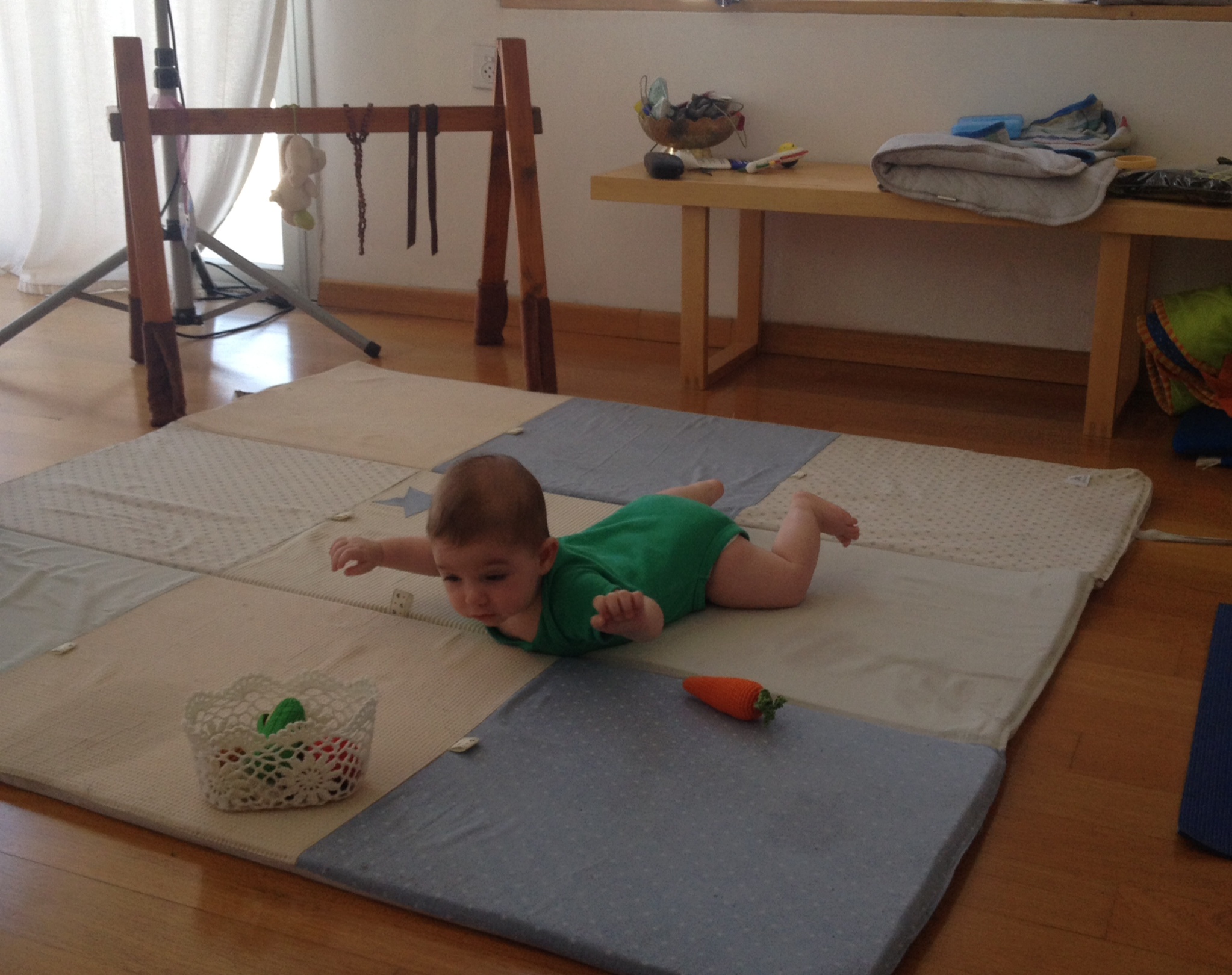
    Why sleep when you can skydive?
    Why sleep when you can skydive?

    But why frame all of this as a negative? What we’re actually seeing is a developmental leap which we should be celebrating – not a regression. Gadi hasn’t stopped rolling over and he doesn’t babble to himself less – he’s just having some sleep disturbances. When our teenagers turn into maniacs during exam time, or our friends turn into Bridezilla during the stress of planning their dream wedding, we don’t say they’re having a regression – so why do it to babies? I think this ill-conceived concept that development is perfectly linear is playing a huge part in how difficult we experience these admittedly difficult patches.

    Of course, it’s not just the words – it’s the mindset that comes with them. When we expect that everything will stay the same and refuse to roll with the ebb and flow of life, or that we’ll get more and more sleep or time to ourselves as time goes by, we’re kidding ourselves. And to be totally honest maybe it’s even kind of selfish. We made the decision to have kids – surely we anticipated some rough patches? Maybe really it’s us, the parents, that are having a regression when we view tough times without context, without zooming out to remember the big picture. To quote the Buddha:

    Pain in life is inevitable but suffering is not. Pain is what the world does to you, suffering is what you do to yourself. Pain is inevitable, suffering is optional.

    And so, in an effort to take out the suffering, I propose: The ‘Four Month Super Leap’! Who’s with me? Let’s marvel at our babies’ progress rather than getting ourselves all bummed out about a bit of screaming and tiredness.

    One last thing: I highly recommend whipping up a batch of these delicious chocolate chili vegan cookies. They’re full of sugar, granted, but hey – they’re keeping me buzzed and happy at the present moment so what the hell. Just try not to leave out the baking soda if you can manage it – my first batch suffered from a severe baby brain-induced softness regression.


    20140626-104309-38589801.jpg
    Gotta just go with it – HRH Gadi takes the bed.
  • The Only Thing I Can Control is Laundry

    The last few years have been a real journey for me – from therapy and NLP to new friends and new places, yoga and meditation. I’ve learnt so much, and yet really it all comes down to acceptance – and control. Accepting the things I don’t like about myself and others, learning that everything comes and goes – regardless of my desires. That even the things I think are in my control generally are not.

    And now with a four-month-old baby, it seems to be the perfect time to put that understanding into practice. To really be in the moment, release my minute-to-minute desires, surrender to the timeless flow of breastfeeding. To realize how little I really know.

    And that’s why I love doing the laundry. Very non-feminist of me, I know – but seriously that shit does what I say. If I program the machine to finish at 8am, it complies. I can take out all my OCD tendencies on putting the socks on one side of the line, the baby clothes on the other, and of course separating sheets and towels (despite my darling husband’s efforts to the contrary). I can fold it all neatly and it never fights back.

    And best of all – it’s never-ending. Lucky me.

  • I Have Absolutely No Idea What I’m Doing

    Just a few months ago I was sure that I had pregnancy and birth all figured out – that I knew exactly what to do (and what everyone else was doing wrong). And then the big day came along and I was humbled as hell. And now with a four month old, most of the time I still think I have all the answers – I meditate my way through nursing, use my mindfulness skills to observe the baby, fit in some yoga and healthy food when I can and everything is perfect.

    And then an evening like last night comes along to show me that I have absolutely no idea what I’m doing. Certainly not enough to be telling anyone else what to do. Nothing we did could get Gadi to sleep, and he was completely overtired. An hour of screaming ensued. Just an hour, not really so much in the scheme of things I know but it was pretty far from the norm. I hadn’t slept well the night before so my exhaustion was probably all the fuel need to spark this overwhelming feeling that I am COMPLETELY CLUELESS. That every other time I’ve managed to calm the baby has been a total fluke. That I need a complete change of tack because nothing is working and what if something is wrong and maybe he’s not even tired and did I feed him too much? Or not enough? I’m sure he’s tired wait no maybe he’s not, look he’s wide awake, but he keeps closing his eyes – and doesn’t that curled tongue gesture mean hungry?

    In the end, it was a mixture of singing and cuddles that I haven’t used to help him sleep since he was a tiny baby that did the trick. Maybe he’s teething or it’s a phase or some sort of sleep regression or something, I don’t know. Probably just really overtired. And of course after all that, he had one of his best night’s sleep ever – only one wake up to eat and straight back to sleep – and is now happy and rested and giggling on the play mat with his dad.

    I suppose this is just another reality of being a parent, right? That we never have all the answers – the game is constantly changing. Just like everything else.

  • My Baby is a Guru

    My baby is a little Buddha. A tiny, super cute & portable meditation teacher.

    In simple mindfulness meditation, we learn to bring our attention back to the breath, over and over again. “Breathe in, breathe out, breathe in, start preparing dinner, do I have any onion in the house? Oh, I have to write that email, ah – breathe in, out, in, out, in, out – hey what’s that pain in my knee, oo my ear itches – wait – breathe in, breathe out.” And so on. Each time we remember what we’re meant to be doing, mindfulness comes back and we return to the meditation. The longer we’re able to keep our attention on the breath, the more subtleties of sensation reveal themselves to us, and the deeper our concentration and insight grows.

    So too with caring for a baby – the more we keep our attention on what’s happening in the here and now, the quicker and more accurately we’re able to respond, and the deeper our connection grows. Even from the very first day, it’s so easy to lose sight of what’s actually happening – especially through the exhaustion, confusion and emotional roller-coaster that comes with a new baby. It’s natural for our minds to wander to all the things we want to get done once the baby finally goes to sleep, to get obsessed with schedules and milk quantities and not waking the neighbors.

    But babies don’t care about this stuff, their minds aren’t running around like ours – I presume that doesn’t happen until the development of language. Instead, babies are right there in the moment, always. Just trying to get their needs met, and to work out what the hell is going on out in this strange, dry, new world. And so each and every peep they make, each groan, each cry can be a lesson in stopping the mind babble and coming back to the present moment to see what’s really happening. To investigate it with the patience and curiosity of the deepest, most silent meditation.

    Here’s an example – not one I’m proud of, but a good one nonetheless: earlier today I spent almost an hour trying to help a crying Gadi relax and get to sleep. Definitely out of character for a daytime nap, but okay. I tried everything – from singing, patting, humming and “shh”-ing, leaving him for a couple of minutes to try work it out himself, even the dummy he’s never liked – everything. He was not hungry and definitely tired, but here’s the truth – I was starving. Somewhere between noticing that he was tired and putting him down in his bed, my mind had raced ahead to the quinoa and vegetables awaiting me in the kitchen, and I wasn’t really paying attention. I was ignoring the mindfulness alarm screaming at me, loud and clear and flashing red.

    When I realized, I felt like a complete moron: He was hot. I took his pants off and the screaming stopped instantly, and a smile spread across his tired little face. And then the next moment was something different again – he was thirsty (not surprising since he’d just spent 40 minutes trying to get his point across!) And so he drank, and he’s still passed out in the middle of our bed now, over 2 hours later.

    This new level of mindfulness that he’s teaching reminds me to examine the reality of this very moment – not what came before or what I want to come after – and to deal with just that. To accept the present moment rather than trying in vain to resist or to manipulate, or to take anything for granted. Just because the baby went to sleep easily at 6:45pm last night after a bath, massage, story and feed DOES NOT guarantee that he’s going to do it again tonight, or in fact ever again. He might – but taking the assumption for granted is a surefire recipe for disaster, and for missing signs and igniting a battle of wills between the two of us. Instead, my little mindfulness teacher guides me with his signals – helping me avoid hours of him crying and me feeling like a failure. And every time I slip out of focus, start senselessly expending energy on changing the present moment – he beckons me back with his tiny fingers and his not-so-tiny cry.

    All I have to do to learn is watch and listen, now.

  • 9 Tips for Surviving the Postpartum Period

    A wise woman once told me: Nobody talks about the after party. Ironically, this mother of three told me this after seeing me basically every day of my first pregnancy, and yet uttering nary a word about what I could expect in the postpartum days and weeks. The impending labor and birth we talked about, naturally, along with pregnancy matters galore – from ultrasounds and iron supplements to headaches and contractions. Parenting plans came up, name ideas, baby furniture. Hospitals, midwives and nursing consultants. But postpartum recovery was just never mentioned. No one was game to raise the issue, it seems.

    It’s understandable. You’d sound like a right downer if your first reaction upon finding out your friend was pregnant was to tell them, “Now love, you should know that sitting down may well hurt for quite some time after delivery.” I get it. But women need – and deserve – to be prepared for this intense period. This paradoxical moment in time when you need quiet and rest more than anything else – and instead you get basically no sleep, well-meaning family and friends bugging you round the clock, and varying degrees of aches and pains. And just to make things more confusing and ambiguous, all of this is sprinkled with heart-bursting love, super birth hormones and an amazing appetite.

    And so I write this by way of preparation for those about to give birth, and vow to send it to my friends and my sisters when their time comes. Even if they don’t love me for it at the time.

    1. You’re gonna bleed, big time – and not just like the “heavy period” that I remember hearing about. The midwife is gonna stick three surfboard-size pads together for you, and you’re gonna thank her for it. Keep in mind that the more you rest, the quicker your postpartum bleeding will stop. Rest.
    2. Black is the new black. You don’t want to find out what happens when your grey sweatpants make it to your hospital bag. This goes for underwear for the first couple of weeks too (though I actually recommend buying the sexy disposable mesh ones for the first few days. So much easier).
    3. Going to the bathroom is going to hurt, one way or another. You got through the birth, you can get through this. Take it slow and if possible take the shower head with you (assuming you had a vaginal birth). Spraying water on the area while you’re doing your business is a godsend. I wish someone had told me this earlier.
    4. Cold is your friend. If you’re in a hospital they should provide frozen magnesium or witch hazel pads, and at home you can easily make your own. Trust me, you’ll almost enjoy it.
    5. Stay in the moment – don’t waste your precious energy worrying about what you could have done differently during the birth, or how long this discomfort is going to last. Try this nursing meditation, if it tickles your fancy, put your phone down and focus on your breath for a few minutes, or utilize whatever reminders you need to stay mindful of what you’re doing right now. I really believe this will keep you sane through at least some of the exhaustion and the emotional breakdowns.
    6. Give the nursing apps a miss – unless you (or your baby) are having real problems. I used one at first and started to feel like I couldn’t feed unless I had my phone, not to mention getting obsessed with how long, which boob, averages etc. Losing my phone 4 weeks in was a blessing in disguise, and I realized that a hairband on my wrist to tell me which boob was next worked (and continues to work) just as well.
    7. Let people help, but remember to tell them when you need space. I didn’t do this enough and I should have. The first few weeks are crucial for bonding with your new baby – and if you’re anything like me, resting properly with guests in your space is difficult. Leave the washing. Screw the dishes. Forget about other people’s feelings for now. Lay on the couch.
    8. Bring a snack bowl to bed (better yet, get someone else to make it for you). Waking up every hour or so to breastfeed feels a lot better when you have chocolate, dried fruit, nuts etc at arms reach. Ditto for a liter or two of water.
    9. Give yourself a break. There is an unrealistic expectation on women (I loved this blog post on the topic) to bounce back right after birth, and for most of us it’s just not that simple. Many cultures around the world expect new mothers to be completely out of action for the first 40 days. Don’t expect to feel “normal” for the first month, at least.

    If you’re reading this before giving birth – or even before getting pregnant – I should add: it’s totally worth it. It would be even if you needed to wear the triple maxi pads for six months (you don’t). It can just be a bit of a shock, that’s all.


  • Nursing and meditating (or, nipple meditation)

    Nursing and meditating (or, nipple meditation)

    So I’m pretty sure I’ve invented a new type of meditation. I’ve googled it and everything – no one has thought of it before; I’m truly a trailblazer. Combining my sparkling new motherhood experience and my only slightly more established mindfulness meditation practice, I present: nursing meditation (or, nipple meditation – if you prefer).

    Essentially a modification on anapana sati, the Buddhist meditation of mindfulness on breathing, it goes a little something like this:

    1. Do whatever you usually do to start feeding – get comfortable, have water nearby, get baby latched on and settled in.
    2. Let your eyes close gently, sit up straight, and take a few deep breaths to settle in yourself – into your body, the experience and sensations of right now.
    3. When you feel calm and present, bring your full attention to the nipple of the breast from which your child is eating. At first you might just notice the sucking, tugging sensation of nursing – and that’s fine. When your mind wanders – and it always will – your only job is to gently bring it back to your nipple. As you deepen your concentration the subtleties of sensation – perhaps temperature, speed, texture – will reveal themselves. Without judging or analyzing, simply observe – sit back and watch the sensations, the experience of each moment come and go.
    4. For bonus points (not really), cultivate an appreciation for the truly amazing process of growing this tiny, beautiful creation – which started as a few cells inside you however many months ago and now continues to be nurtured by your body.
    5. When your nursling is finished his/her meal, open your eyes and take a moment – and really be there – before rushing off to continue the ongoing cycle of diaper changes, baths, tummy time and naps.
    6. Repeat as often as possible.

    Now, I’m pretty sure this isn’t gonna give me a free ticket to nirvana or anything, but it does seem to be keeping my fledgling meditation practice at bay while riding the early months of parenthood. Just breaking it down, getting out of my head and into my body for a few minutes, a few times a day brings a centered quality to my consciousness that I’ve only ever been able to achieve through meditation.

    Babies live in the moment. The least we can do is try to meet them there every now and then.

  • Today’s Achievements During Morning Nap Time

    I’m feeling proud. During Gadi’s morning nap today I managed to:

    1. rinse soiled baby clothes and cloth nappy from overnight
    2. put on load of washing
    3. write two emails
    4. send two text messages
    5. comment on two Facebook posts
    6. pump 200mL of breast milk
    7. separate, label and store said breast milk
    8. shower
    9. brush teeth
    10. get dressed
    11. hang up said washing

    and

    12. write harried blog post

    Seriously, I remember times when I didn’t get this much done in an entire day.

    10:11am and still going strong
  • The Secret Link Between Babies and Camping

    In my recent musings (granted – probably fueled by some mild infant-induced sleep deprivation), it has occurred to me that there are an unnerving number of similarities between babies and camping. Allow me to present my findings:

    1. Rise with the sun
    The first rays of sunlight penetrate the tent, stimulate a hot-house effect and make sleeping past 6am impossible. Maybe that’s what’s happening in my baby’s brain.

    2. Embrace getting dirty
    At least there aren’t any mirrors in the great outdoors.

    3. It pays to be prepared
    I’m not sure what’s better – the feeling of triumph as you realize there’s a bottle opener on your Swiss army knife, or the day when you actually use the fourth “spare” outfit (see #2).

    4. Simple meals are best
    You’re gonna need to either cook it with a mini stove or eat it with one hand on your lap. Probably better off with a sandwich, huh?

    5. Waking up way more often than you’d like
    As if #1 wasn’t enough.

    Need I go on? A word to the wise. Before you go off the pill, ask yourself – do you feel like going on a full-time, non-stop camping trip?

    Luckily, I do.

  • What Not to Expect: A Guide to Staying Calm & Enjoying Pregnancy

    Despite what I was led to expect – by peers, family members and mainstream media alike – I haven’t found pregnancy to be that difficult at all. Certainly, I do get a bit more tired and emotional than I used to, felt queasy as hell in the first few weeks and have had the odd bout of heartburn (more likely caused by the obligatory iron tablets than anything else) – but it’s been nothing like the nine months of hell that popular literature and opinion had led me to anticipate.

    In fact, most of the time I feel great – both physically and emotionally – unless it’s 9am. Because that’s when my daily email from “What to Expect” arrives, carrying its latest attempt to simultaneously scare the shit out of me and make me buy truckloads of baby things that I’m pretty sure we don’t need. For starters, let’s check out the subject lines on the last week’s emails:

    • Dry Skin
    • Fetal Sleep Patterns
    • Insomnia
    • Ultrasound Photos
    • Relieving Neck Pain
    • Feeding a Cold and Flu
    • Coping with Varicose Veins

    Seriously? How is it that pregnant women are simultaneously perceived as being glowing and radiant, all the while suffering from peeling skin, popping veins, colds and sore necks? What am I meant to be growing in here, an evil monster or a baby? How about:

    • Learning to relax
    • Focusing on how freaking excited you’re getting
    • Breastfeeding basics
    • Stretches to prepare you for labor
    • Iron-rich recipes
    • Learning perineum massage
    • Positive birthing affirmations

    I know everyone’s different but somehow we as a society seem to have accepted a myth that pregnancy has to be one of the most unpleasant periods in a woman’s life – when really it should be one of the most precious and empowering. And I think it’s a damned shame. Even women – actually, especially women – dealing with uncomfortable symptoms like back pain and headaches would be far better served by some encouragement and tips on how to relax than by this anxiety-invoking junk.

    Rather than learning how to be good patients, and to constantly focus on the negative, we should be gearing up to be good parents – I mean come on! I’m growing a human being inside of me! How freaking cool is that?! I strongly encourage pregnant women, their partners, and anyone else involved in the process to surround themselves with as many positive voices and sources of information as possible (see below for a list of places to start), to help combat this dangerous influx of negative messages.

    If this sort of attitude doesn’t come naturally to you – seek out support. It’s there, albeit hidden. Take a birthing class which focuses on natural, non-medical options (yes, while making sure that you know what to do if something goes wrong). Refuse to get into battle story-esque conversations about horrible, stressful births. And it sounds crazy, but I really believe that eating well, resting when you can/need to and getting some exercise in a few times a week can make all the difference to a positive outlook and more enjoyable pregnancy.

    Oh, and if they’re getting you down too, probably a good idea to unsubscribe from What To Expect’s daily horror updates.

    Of course, I’m not in the clear yet, with still (hopefully) somewhere between 4 and 8 weeks until our baby’s Birth Day. But if this all goes down the drain next week at least I will have had eight-and-a-half months of relative calm. And that’s without even mentioning the head space I intend to be in when the much anticipated day arrives. More on that soon 🙂


    A positive reading list: Books & blogs